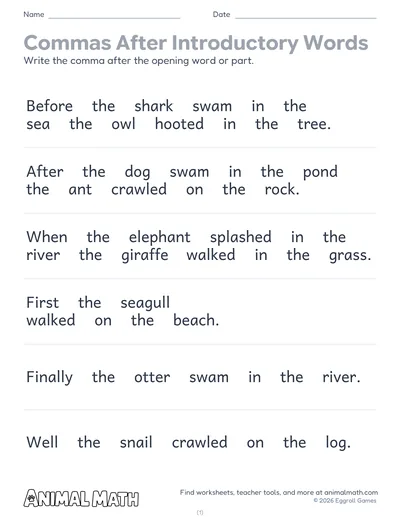
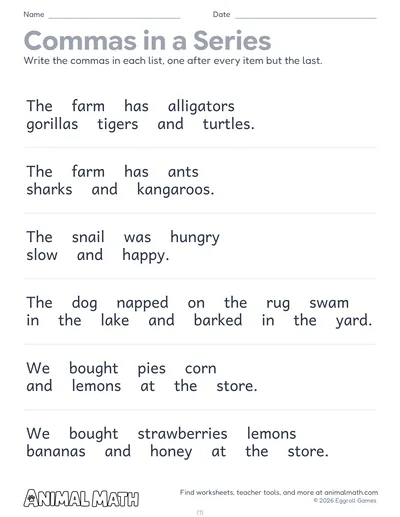
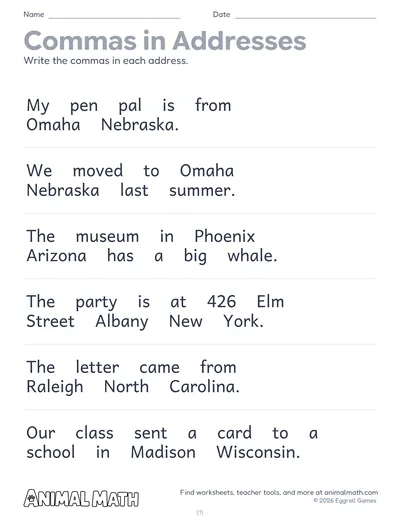
Five worksheets that take turns through the activities. Pages 1 and 4: students write the commas after yes and no, before question tags, and around names. Pages 2 and 5: students circle why each sentence has its comma. Page 3: students circle the sentence with the meaning asked for. Every answer is worked out from the sentences themselves, and the answer keys mark each one.
Write "Let's eat Grandma!" on the board and ask what it means. Then add the comma and talk about why it matters.
Write notes to family members that start with their names, with the comma in place.
Commas after yes and no, before a question tag like isn't it, and around the name of the person spoken to. Students add the commas, tell why each one is there, and see how a comma changes meaning.
Tell us what to make next, or build your own with a worksheet maker.
This worksheet is free to download, print, copy, and hand out in your classroom or at home. You do not need to create an account, and there are no watermarks on the PDF.