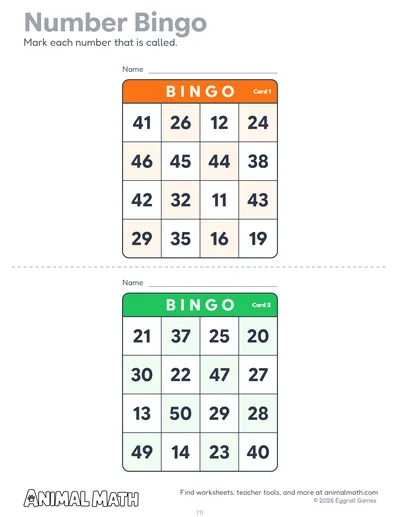
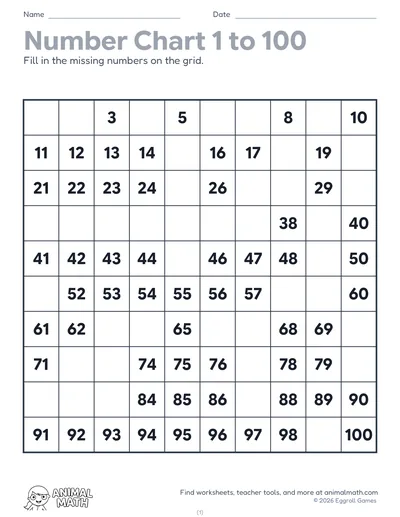
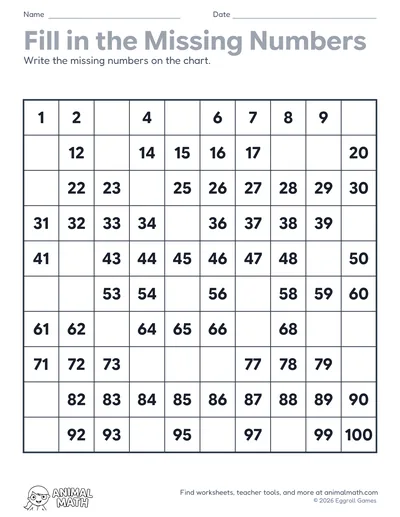
Five pages of numbers to read out loud, each a new stretch of the number line: 11 to 30, 20 to 50, 40 to 70, 60 to 100 and 90 to 120. Each page has 40 numbers in eight rows, in mixed order, so a child has to read every number rather than count along. Numbers that look or sound alike sit side by side: digits swapped (12 and 21, 46 and 64) and teens beside their tens (13 and 30). The answer key is a teacher copy of each page with a tick box and the number's word under every number, and a row to write how many were read correctly in one minute, three times.
Sit beside one child with the teacher copy, point to the star and say "Read across." Tick each number read correctly and circle the ones missed; after one minute, the running count at the end of the row tells you how many were read. Partners can do the same: one reads, the other points and checks against the teacher copy. Try the same page again a few days later and compare the scores.
Have your child read a row to you, then read it back yourself with a mistake for them to catch ("Is that 21 or 12?"). A page a week is plenty; go back to a page that was hard.
This pack supports the following Common Core State Standards for Mathematics:
© Copyright 2010. National Governors Association Center for Best Practices and Council of Chief State School Officers. All rights reserved.
Reading numbers out loud, from the teens to 120. Students read rows of numbers in mixed order, with look-alikes such as 13 and 31 side by side, while a teacher ticks each one on the teacher copy.
Tell us what to make next, or build your own with a worksheet maker.
This worksheet is free to download, print, copy, and hand out in your classroom or at home. You do not need to create an account, and there are no watermarks on the PDF.