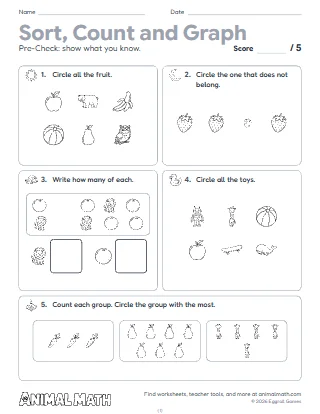
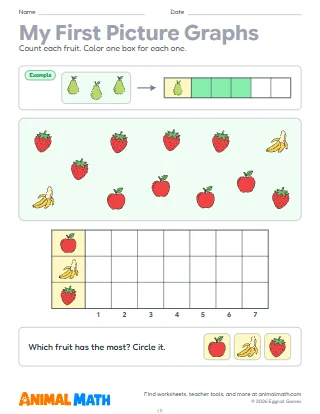
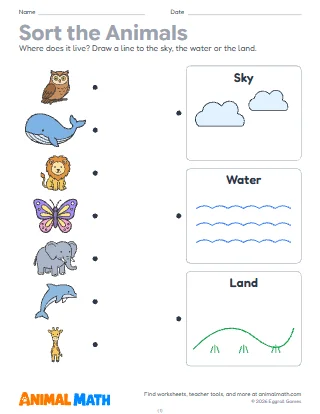
Five pages on noticing what is the same and what is different. On page 1 students look at the picture or shape in the box and circle the one just like it. Page 2 turns it around: in each row of five, one is different, by what it is, by its size or by the way it faces. Page 3 has two columns to match with lines, with look-alikes such as a big bear and a small bear or a duck facing each way. Page 4 sorts: draw a line from each thing to its group, food or animals, then big or small. On page 5 students look at two things and circle "same" or "different".
Read each direction aloud and talk about the first row together: "How is this one different? It is smaller." Ask students to say why, using the words kind, size and way it faces. Real objects help: set out four blocks the same and one different, or two toy cars facing different ways. Page 4 works well after a sort with real things on the carpet.
Play "same or different" with socks, spoons or toys: hold up two and ask which word fits, then ask how they are different. Sort the laundry or the groceries together: food and not food, big and small.
This pack supports the following Common Core State Standards for Mathematics:
© Copyright 2010. National Governors Association Center for Best Practices and Council of Chief State School Officers. All rights reserved.
Looking closely at pictures and shapes to tell what is the same and what is different, the first step in sorting and classifying. Students circle the match and the odd one out, match look-alike pairs, sort things into two groups and decide whether two things are the same or different.
Tell us what to make next, or build your own with a worksheet maker.
This worksheet is free to download, print, copy, and hand out in your classroom or at home. You do not need to create an account, and there are no watermarks on the PDF.