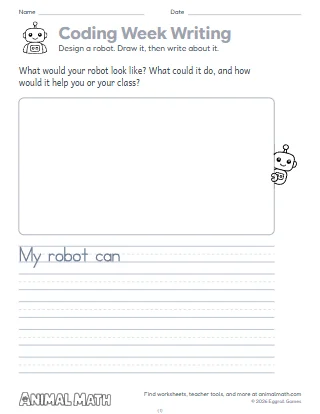
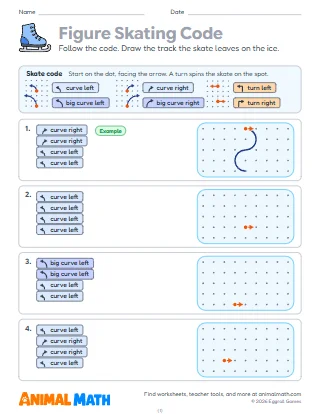
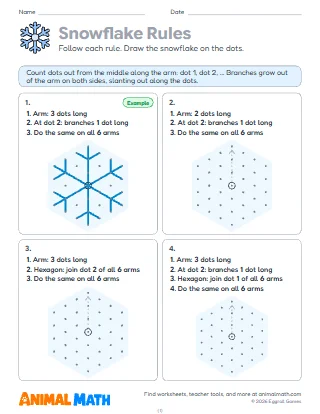
Computer Science Education Week is held each December around the birthday of Grace Hopper, born December 9, 1906, who wrote programs for some of the first computers. Schools use the week to try coding and to learn about the people who built computing, from Ada Lovelace’s notes of 1843 to the code that helped land Apollo 11 on the moon and the World Wide Web.
Six pages of short lives. Pages 1 to 3 each have two short biographies with two questions each and one question about both: Ada Lovelace and Grace Hopper; Dorothy Vaughan, who taught herself and her team FORTRAN, and Margaret Hamilton, whose code kept the Apollo 11 landing going; and Jerry Lawson, who led the team behind the first home video game system with game cartridges that held programs, and Tim Berners-Lee, who made the World Wide Web. Page 4 matches six coding words to their meanings, page 5 is a timeline from 1840 to 2000, and page 6 a page to plan a program of your own.
Read one page a day during Computer Science Education Week, alongside an unplugged coding activity. After page 4, ask students to find a bug in a set of steps you write on the board. Page 6 works as a short project: students can share their programs and act out each other’s steps.
Read a biography together and look for more about that person, such as the photo of Margaret Hamilton beside her team’s code or the moth taped into a computer’s logbook in 1947.
Short biographies of six computing pioneers, from Ada Lovelace’s notes of 1843 to Tim Berners-Lee’s World Wide Web. Students read and answer questions, match coding words to their meanings, read a timeline and plan a program of their own.
Tell us what to make next, or build your own with a worksheet maker.
This worksheet is free to download, print, copy, and hand out in your classroom or at home. You do not need to create an account, and there are no watermarks on the PDF.