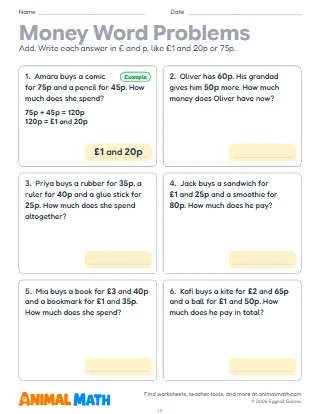
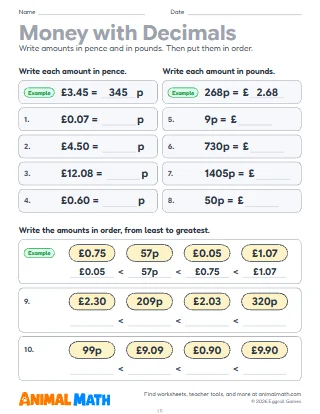
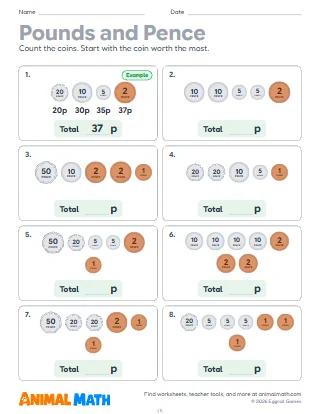
Five pages on giving change, from Year 2 pence to Year 3 pounds and pence. On page 1 each thing costs less than 10p or 20p and is paid for with one coin: children count on from the price to the coin, one hop at a time on a number line, and write the change. Page 2 pays with a 50p or a £1 coin: children count on to the next 10p, then in tens, writing the stop and each jump on the number line before the change. Page 3 prices things in whole pounds and pays with a £5, £10 or £20 note; a bar model shows the money paid, the price and the change, and children finish the number sentence, such as £10 − £7 = £3. Page 4 is short stories in pounds and pence: children count on in jumps on an open number line, to the next 10p, to the next pound, then in pounds, and write the change as £2 and 65p, or in pence when it is under £1. Page 5 is a toy shop with price tags: children add the prices of two toys, then find the change from the coin or note paid. The first problem on each page is worked as an example.
Set up a class shop with price labels and real or play coins before page 1, and give change by counting on out loud: "7p, 8p, 9p, 10p, so the change is 3p." For page 2, count on to the next 10p first, then count in tens. Page 3 is a good place to talk about the bar model: the top bar is the money paid, and the change is the missing part. On page 4, remind children that £1 is 100p, so counting on from £2 and 40p to £3 is a jump of 60p.
When you buy something small, let your child work out the change before you are given it, counting on from the price. Play shops at home with price labels on a few toys and a pile of coins, and take turns being the shopkeeper who gives the change.
This pack supports the following Common Core State Standards for Mathematics:
© Copyright 2010. National Governors Association Center for Best Practices and Council of Chief State School Officers. All rights reserved.
Giving change with UK money, from a 10p coin up to a £20 note. Students count on from the price to the money paid on number lines and bar models, then add two prices at a toy shop and find the change.
Tell us what to make next, or build your own with a worksheet maker.
This worksheet is free to download, print, copy, and hand out in your classroom or at home. You do not need to create an account, and there are no watermarks on the PDF.