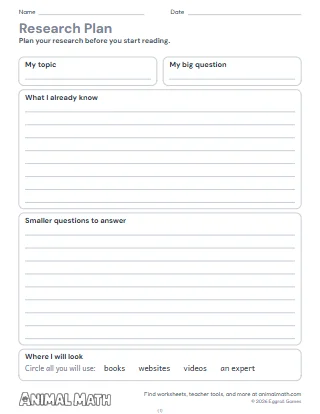
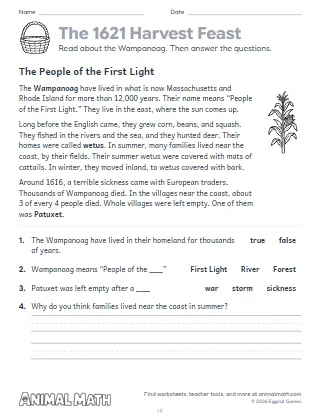
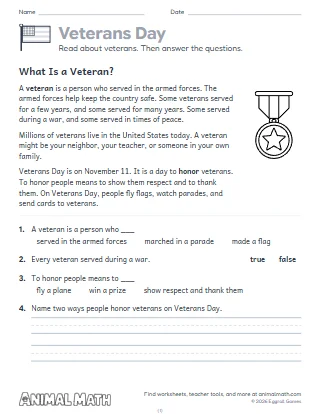
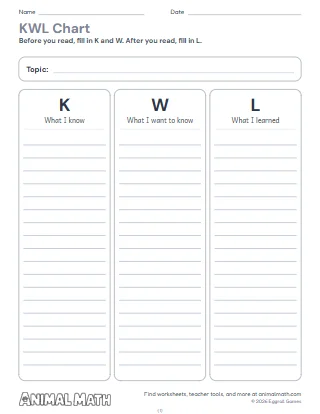
Six organizers for any nonfiction text, on plain notebook lines. Pages 1 and 2 are KWL charts, the second with a column for where each fact was found. Pages 3 and 4 are main ideas, details and a summary. Pages 5 and 6 are text features: a hunt, and why each feature is there.
Use the KWL chart with sources for a research project: students fill in K and W before they start, and note each fact and where they found it as they read. Model page 3 with a short article, then let students try page 4 on a longer one.
After your child reads an article, ask them to tell you its main idea in one sentence and the two facts that best support it. Look at a chart or map in the article together and ask what it adds.
Graphic organizers for any nonfiction text: KWL charts, how key details support a main idea, two main ideas and a summary, and text features. Students note what they learn and where they found it, explain how details support a main idea, sum up a text and tell how each feature helps.
Reading Organizers for 4th–5th Grade
 KWL and Main IdeaThis pack
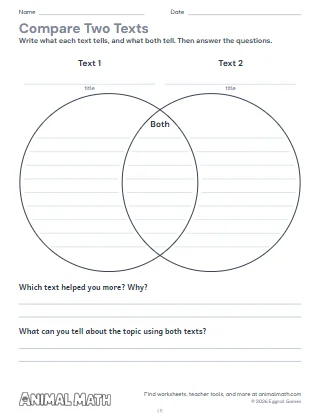 Comparing Texts
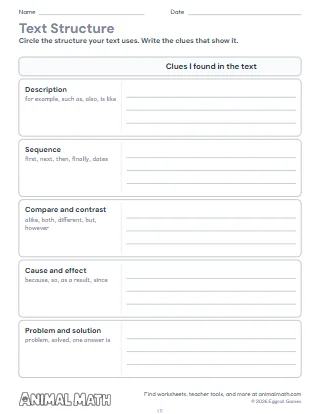 Text Structure
Tell us what to make next, or build your own with a worksheet maker.
This worksheet is free to download, print, copy, and hand out in your classroom or at home. You do not need to create an account, and there are no watermarks on the PDF.