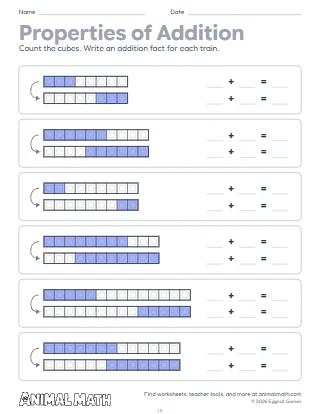
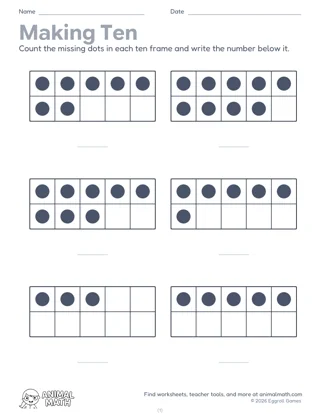
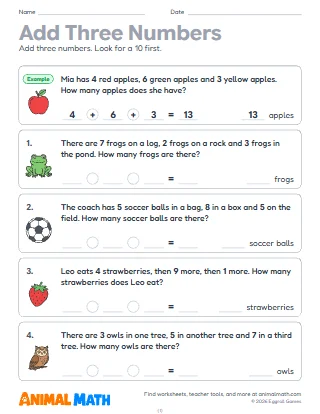
Five pages on adding three numbers, where the order you add in makes the work easy. Page 1 shows three dot cards: students circle the two that make 10, add them, then add the third (6 + 3 + 4: 6 + 4 = 10, 10 + 3 = 13). Page 2 does the same with numbers only, and the pair that makes 10 is not always side by side. Page 3 shows three dice with a double: add the double first (4 + 4 + 3: 8 + 3 = 11). Page 4 mixes the two: students decide whether the helpful pair makes a ten or a double, circle the pair, and add. Page 5 turns it around: find the missing number in 6 + __ + 4 = 15 by making the ten first. Each page starts with a worked example.
Before page 1, deal three cards from a deck (aces to nines) and ask, "Which two would you add first? Why?" Let students argue for a ten or a double. Show that adding in a different order gives the same sum by adding the same three numbers two ways on the board.
Roll three dice and add them. Ask your child which two to add first and why. Look for a double or two numbers that make 10, then add the last number on.
This pack supports the following Common Core State Standards for Mathematics:
© Copyright 2010. National Governors Association Center for Best Practices and Council of Chief State School Officers. All rights reserved.
A 5-page 1st grade pack for adding three numbers with a sum up to 20 by looking for a ten or a double first. Circle the two dot cards that make 10 and add them first, then do the same with numbers alone. Find the double on three dice (4 + 4 + 3: 8 + 3 = 11). Decide whether to make a ten or use a double, circle that pair and add. Last, find the missing number in sums like 6 + __ + 4 = 15. Every page comes in color and in black and white. Answer keys included.
Tell us what to make next, or build your own with a worksheet maker.
This worksheet is free to download, print, copy, and hand out in your classroom or at home. You do not need to create an account, and there are no watermarks on the PDF.