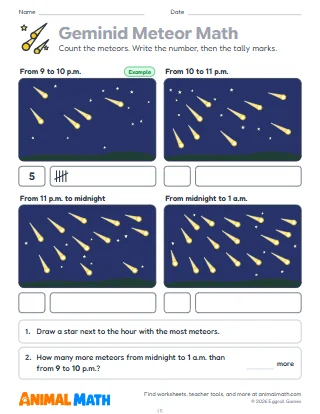
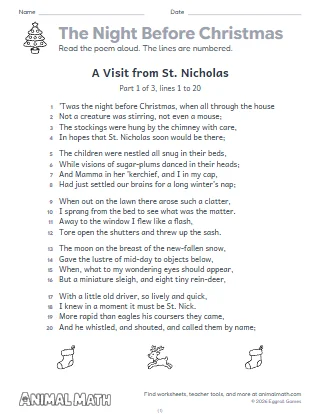
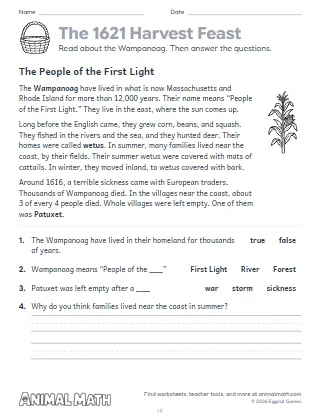
The Geminids are one of the best meteor showers of the year, best seen around the night of December 13 to 14. On a very dark night, a meteor can streak across the sky every minute or two. They seem to come from the constellation Gemini, and unlike most showers they come from a rocky object, Phaethon, rather than a comet. They can be seen from both halves of the world, though in Australia and New Zealand they come later at night, and fewer, so the pages ask for no snow or cold.
Six pages. Pages 1 to 3 are science texts with questions to answer in writing: what a meteor is, and how it differs from a meteoroid and a meteorite; the Geminids, their radiant and where they come from; and how to watch a meteor shower, in the north or in Australia and New Zealand. Page 4 matches eight space words to their meanings, page 5 is a sky-watching log to keep with a grown-up, and page 6 asks for a story told by a bit of Phaethon’s dust and a how-to for a friend who has never watched a meteor shower.
Read the texts in the days before December 13. Act out page 1: one child is the meteoroid and walks fast into the "air", glowing (holding up a yellow card) as it burns up. Send page 5 home for the night of the shower, then share the tallies in class and make a graph of them.
Find a dark spot on the night of December 13 or 14, lie back together and count. Give your eyes half an hour to get used to the dark, and leave phones in a pocket.
Three science texts for the Geminid meteor shower: what a meteor is, why the Geminids seem to come from Gemini and where they come from, and how to watch them. Students answer questions and explain in writing, match space words to their meanings, keep a sky-watching log and write a story and a how-to of their own.
Tell us what to make next, or build your own with a worksheet maker.
This worksheet is free to download, print, copy, and hand out in your classroom or at home. You do not need to create an account, and there are no watermarks on the PDF.