Pueblo potters, at Acoma, Zuni, Hopi and other pueblos, build pots by hand from coils of clay, with no wheel, then scrape, polish and paint them. Many are painted with bold bands of geometric shapes that repeat around the pot. Diné (Navajo) weavers weave rugs and blankets on upright looms, often with stepped diamonds, zigzags and other geometric figures. Each artist's designs are her own, and some designs belong to families or carry meanings that are not ours to copy. So every design in this pack is our own, made up for the pack on a square grid: simple stepped diamonds, steps, zigzags and crosses, inspired by the look of the art, not copied from any real pot, rug or sacred design.
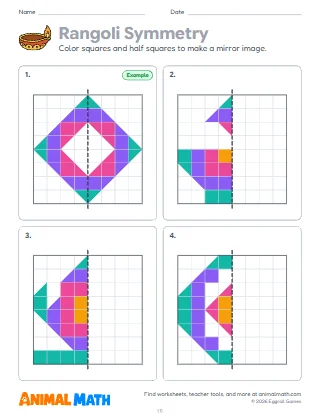
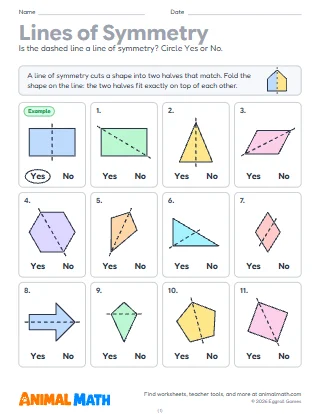
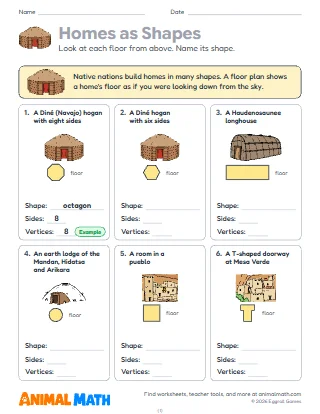
Five pages of 3rd and 4th grade symmetry. Page 1 asks students to draw every line of symmetry on six grid designs and count them, including corner to corner lines. Page 2 shows half of four designs: students color the squares that make the other half match. Page 3 shows a pot with two bands, then three bands to continue, with questions about the repeating unit. Page 4 asks whether six designs look the same after a half turn, and how many lines of symmetry each has. Page 5 is open: students design a band and a rug with symmetry (it has no answer key). The first problem on pages 1 to 4 is a worked example.
Give students small mirrors or tracing paper to check a line of symmetry. On page 4, let them turn the page upside down. Before page 5, look together at photos of Pueblo pottery and Diné weaving from a museum collection, and talk about why we make our own designs instead of copying an artist's.
Look for symmetry in your home: tiles, rugs, plates and fabric. Fold a paper square and cut out a shape to see a line of symmetry appear.
This pack supports the following Common Core State Standards for Mathematics:
© Copyright 2010. National Governors Association Center for Best Practices and Council of Chief State School Officers. All rights reserved.
Lines of symmetry, half turns and repeating bands in geometric designs of our own, inspired by Pueblo pottery and Diné (Navajo) weaving. Students draw and count lines of symmetry, complete the other half of a design on a grid, continue bands around a pot and design their own band and rug.
Tell us what to make next, or build your own with a worksheet maker.
This worksheet is free to download, print, copy, and hand out in your classroom or at home. You do not need to create an account, and there are no watermarks on the PDF.