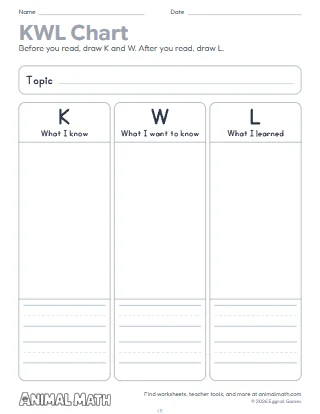
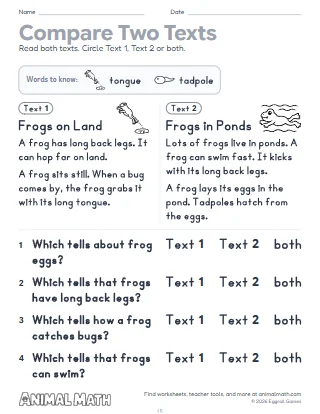
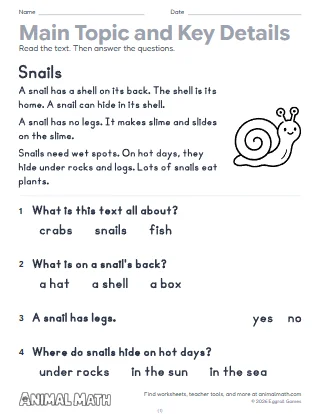
Pages 1 and 3 are little books laid flat: read each one together, then point out its cover, contents, headings, page numbers and glossary. Pages 2 and 4 ask questions about the book before them. Page 5 has children tell what they learned from the words and what from the picture, and page 6 is a plan for a little book of their own.
Show a real nonfiction book from your library next to the little book: find the contents, a heading and the glossary in both. On page 6, children can fold a sheet of paper into a book and copy their plan into it.
Read the little book together and play "find it": ask your child to find the page about swimming or what a tadpole is, using the contents and the glossary.
Little books about frogs and bees, written with words a 1st grader can read, with a cover, contents, headings, page numbers and a glossary. Children find their way around each book, tell what the words say and what the picture shows, and plan a little book of their own.
Tell us what to make next, or build your own with a worksheet maker.
This worksheet is free to download, print, copy, and hand out in your classroom or at home. You do not need to create an account, and there are no watermarks on the PDF.