A full year of 1st grade math in 12 units and 127 lessons, free to print. Every lesson has a one-page lesson plan (how to teach it, the words to use, the mistakes to watch for) and an exit ticket, and every unit has a pre-check, a review and a test in two forms. Each lesson plan points to the worksheets, worksheet makers, teaching tools and quizzes that practice it. The plan below counts one lesson a day, with a day for the pre-check, the review and the test of each unit: 163 days, which leaves room in a 180-day year for catching up, holidays and seasonal packs.
12 units127 lessons163 days33 weeks
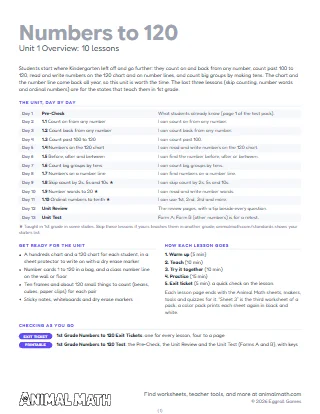
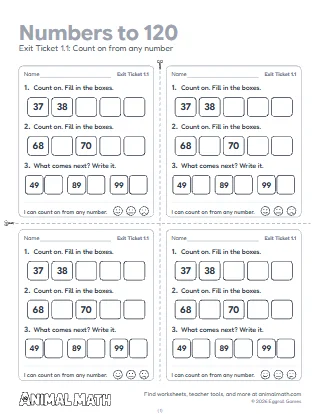
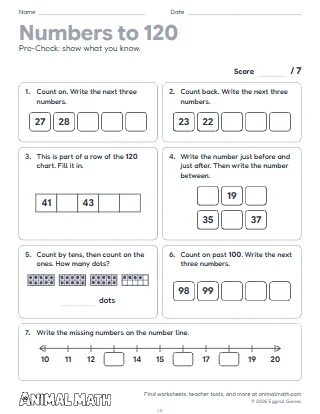
Students start where Kindergarten left off and go further: they count on and back from any number, count past 100 to 120, read and write numbers on the 120 chart and on number lines, and count big groups by making tens. The chart and the number line come back all year, so this unit is worth the time. The last three lessons (skip counting, number words and ordinal numbers) are for the states that teach them in 1st grade.
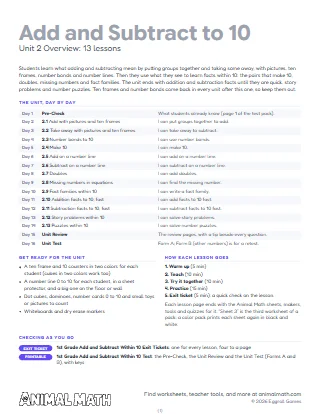
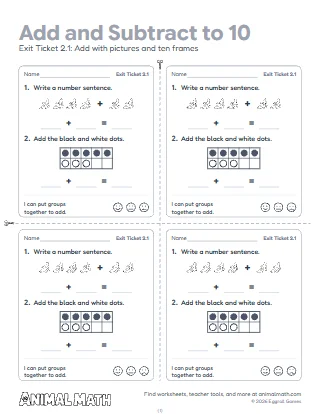
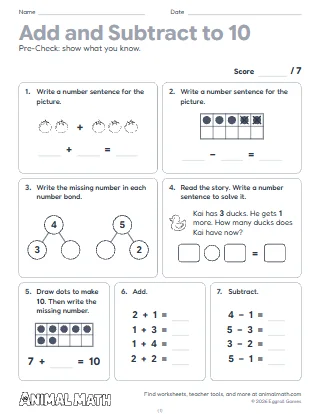
Students learn what adding and subtracting mean by putting groups together and taking some away, with pictures, ten frames, number bonds and number lines. Then they use what they see to learn facts within 10: the pairs that make 10, doubles, missing numbers and fact families. The unit ends with addition and subtraction facts until they are quick, story problems and number puzzles. Ten frames and number bonds come back in every unit after this one, so keep them out.
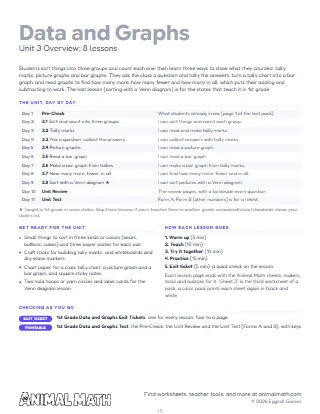
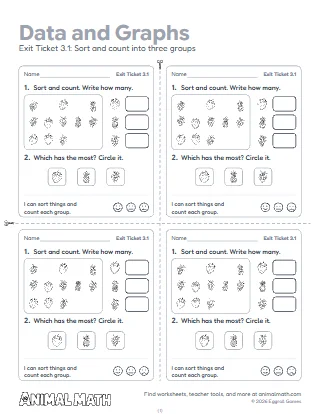
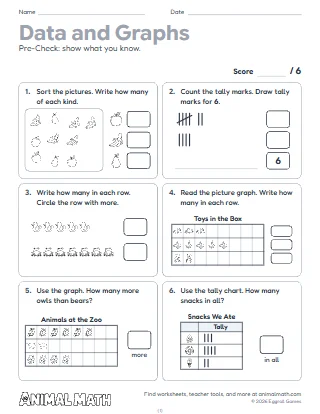
Students sort things into three groups and count each one, then learn three ways to show what they counted: tally marks, picture graphs and bar graphs. They ask the class a question and tally the answers, turn a tally chart into a bar graph, and read graphs to find how many more, how many fewer and how many in all, which puts their adding and subtracting to work. The last lesson (sorting with a Venn diagram) is for the states that teach it in 1st grade.
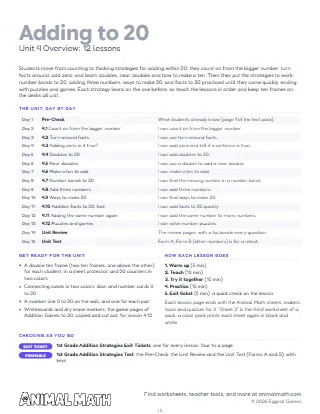
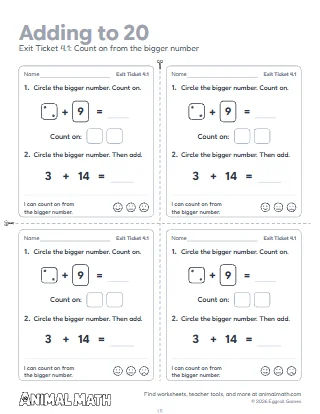
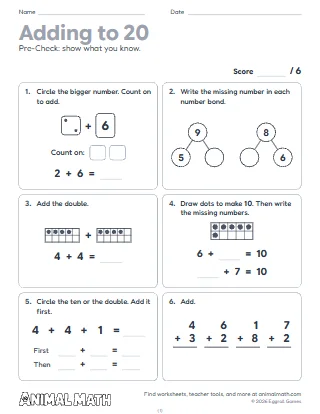
Students move from counting to thinking strategies for adding within 20: they count on from the bigger number, turn facts around, add zero, and learn doubles, near doubles and how to make a ten. Then they put the strategies to work: number bonds to 20, adding three numbers, ways to make 20, and facts to 20 practiced until they come quickly, ending with puzzles and games. Each strategy leans on the one before, so teach the lessons in order and keep ten frames on the desks all unit.
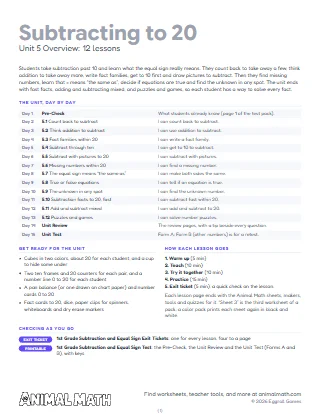
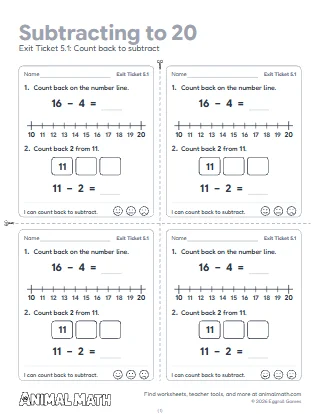
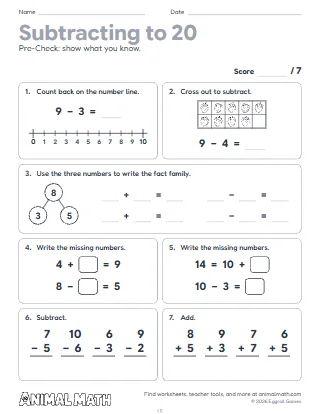
Students take subtraction past 10 and learn what the equal sign really means. They count back to take away a few, think addition to take away more, write fact families, get to 10 first and draw pictures to subtract. Then they find missing numbers, learn that = means “the same as”, decide if equations are true and find the unknown in any spot. The unit ends with fast facts, adding and subtracting mixed, and puzzles and games, so each student has a way to solve every fact.
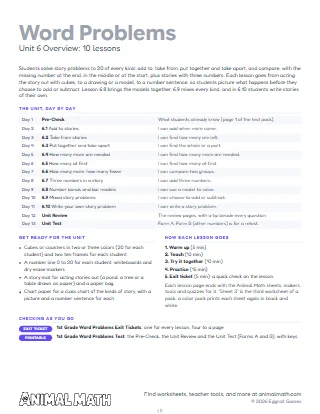
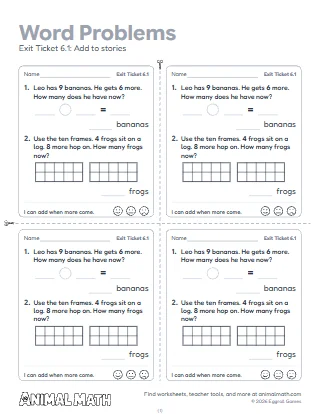
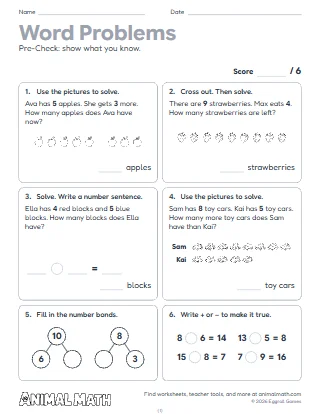
Students solve story problems to 20 of every kind: add to, take from, put together and take apart, and compare, with the missing number at the end, in the middle or at the start, plus stories with three numbers. Each lesson goes from acting the story out with cubes, to a drawing or a model, to a number sentence, so students picture what happens before they choose to add or subtract. Lesson 6.8 brings the models together, 6.9 mixes every kind, and in 6.10 students write stories of their own.
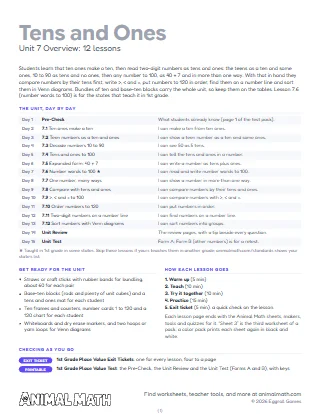
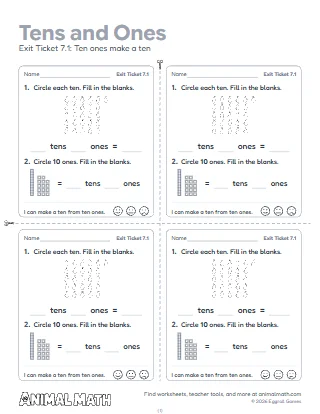
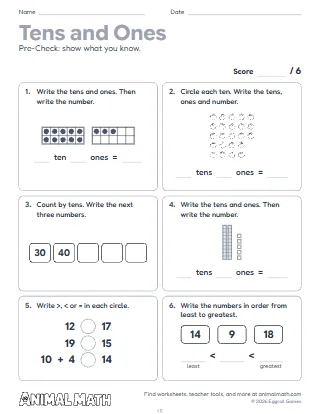
Students learn that ten ones make a ten, then read two-digit numbers as tens and ones: the teens as a ten and some ones, 10 to 90 as tens and no ones, then any number to 100, as 40 + 7 and in more than one way. With that in hand they compare numbers by their tens first, write >, < and =, put numbers to 120 in order, find them on a number line and sort them in Venn diagrams. Bundles of ten and base-ten blocks carry the whole unit, so keep them on the tables. Lesson 7.6 (number words to 100) is for the states that teach it in 1st grade.
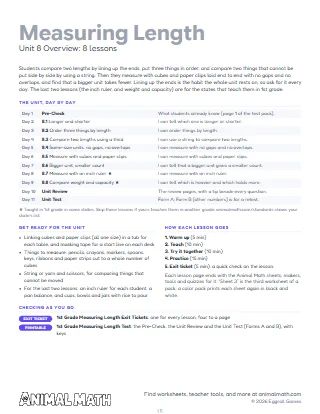
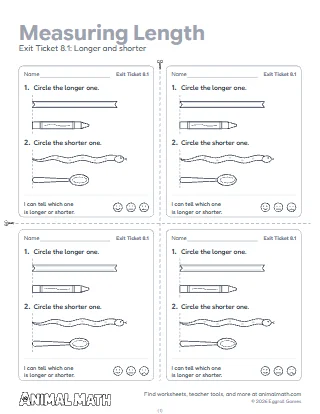
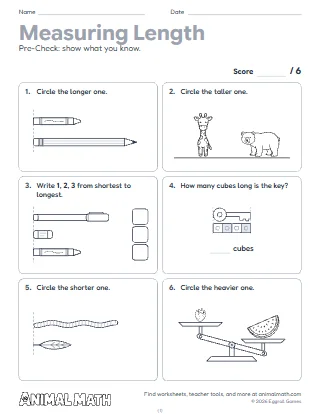
Students compare two lengths by lining up the ends, put three things in order, and compare two things that cannot be put side by side by using a string. Then they measure with cubes and paper clips laid end to end with no gaps and no overlaps, and find that a bigger unit takes fewer. Lining up the ends is the habit the whole unit rests on, so ask for it every day. The last two lessons (the inch ruler, and weight and capacity) are for the states that teach them in 1st grade.
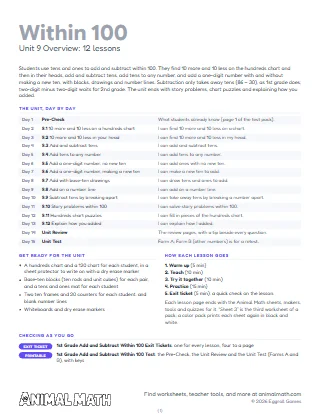
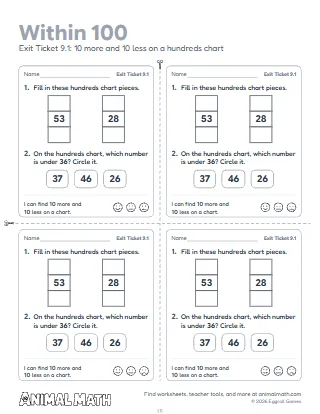
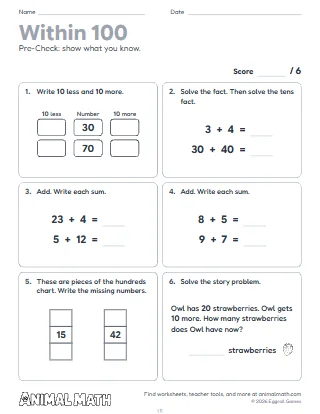
Students use tens and ones to add and subtract within 100. They find 10 more and 10 less on the hundreds chart and then in their heads, add and subtract tens, add tens to any number, and add a one-digit number with and without making a new ten, with blocks, drawings and number lines. Subtraction only takes away tens (86 − 30), as 1st grade does; two-digit minus two-digit waits for 2nd grade. The unit ends with story problems, chart puzzles and explaining how you added.
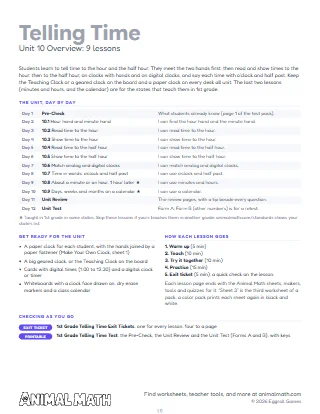
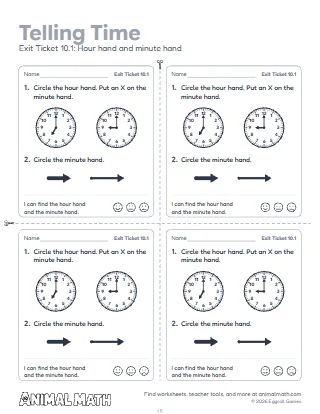
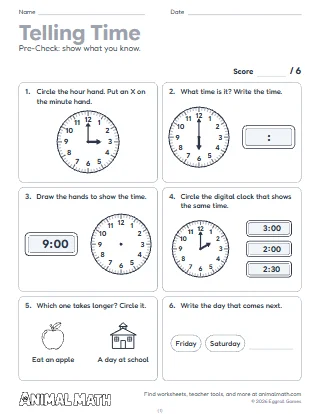
Students learn to tell time to the hour and the half hour. They meet the two hands first, then read and show times to the hour, then to the half hour, on clocks with hands and on digital clocks, and say each time with o’clock and half past. Keep the Teaching Clock or a geared clock on the board and a paper clock on every desk all unit. The last two lessons (minutes and hours, and the calendar) are for the states that teach them in 1st grade.
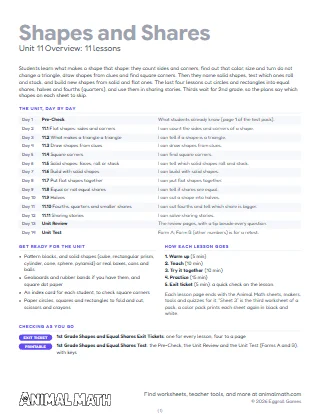
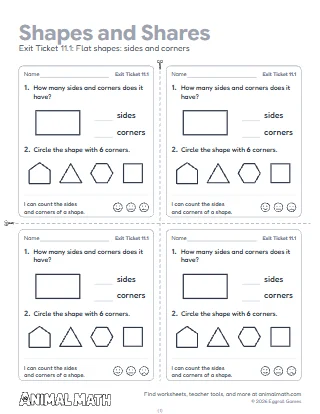
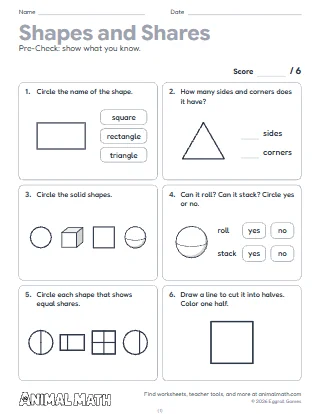
Students learn what makes a shape that shape: they count sides and corners, find out that color, size and turn do not change a triangle, draw shapes from clues and find square corners. Then they name solid shapes, test which ones roll and stack, and build new shapes from solid and flat ones. The last four lessons cut circles and rectangles into equal shares, halves and fourths (quarters), and use them in sharing stories. Thirds wait for 2nd grade, so the plans say which shapes on each sheet to skip.
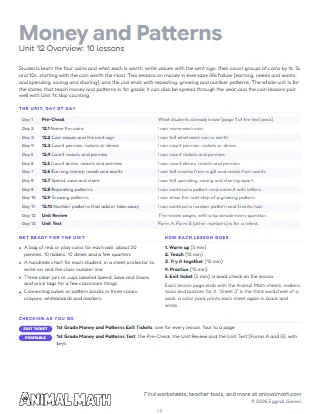
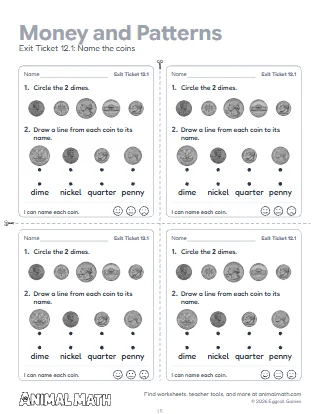
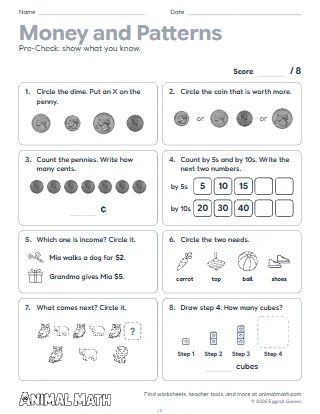
Students learn the four coins and what each is worth, write values with the cent sign, then count groups of coins by 1s, 5s and 10s, starting with the coin worth the most. Two lessons on money in everyday life follow (earning, needs and wants, and spending, saving and sharing), and the unit ends with repeating, growing and number patterns. The whole unit is for the states that teach money and patterns in 1st grade; it can also be spread through the year, and the coin lessons pair well with Unit 1’s skip counting.
Lessons marked ★ are taught in 1st grade in some states and in other grades elsewhere; skip them if your state does not teach them in 1st grade. Unit 12 (money and patterns) is for the states that teach them in 1st grade, and it can be spread through the year.
Tell us which grade you want a curriculum for next.
Every lesson plan, exit ticket and unit test here is free to download and print for your classroom or your home school. You do not need an account, and the PDFs have no watermarks.